Why Data Analytics is the Backbone of Modern Enterprises
Data has become one of the most valuable assets for modern organizations. Every interaction, transaction, and operational process generates information that can provide insights into how businesses operate and how customers behave.


Introduction
Data has become one of the most valuable assets for modern organizations. Every interaction, transaction, and operational process generates information that can provide insights into how businesses operate and how customers behave.
However, simply collecting data is not enough. The real value lies in analyzing that information and transforming it into insights that guide strategic decisions.
This is where data analytics becomes essential.
Modern enterprises rely on advanced analytics tools to process large volumes of information, identify patterns, and generate insights that improve decision-making.
The Growing Importance of Data-Driven Decision Making
In the past, many business decisions were based on experience or intuition. While these approaches still play a role, modern organizations increasingly rely on data to guide their strategies.
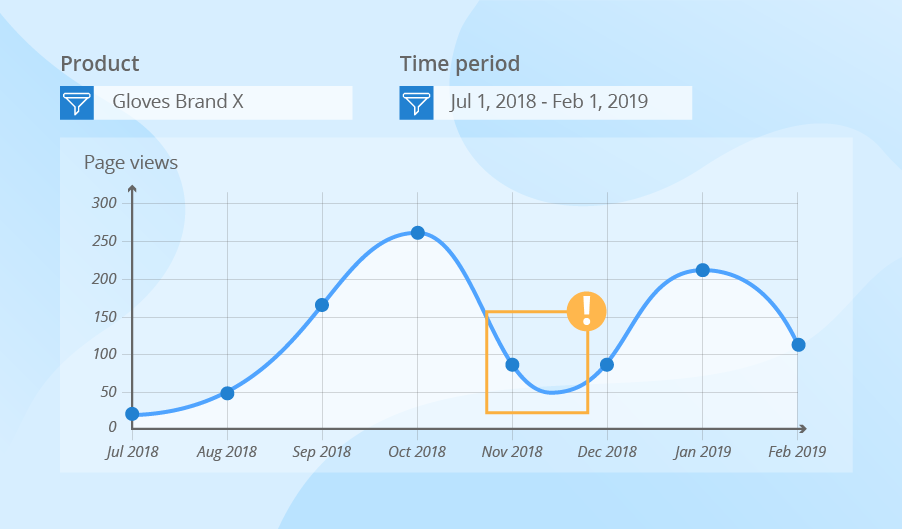
Data analytics allows companies to measure performance, monitor trends, and predict future outcomes.
For example, businesses can analyze customer purchasing patterns to identify popular products or seasonal demand changes. Financial institutions can analyze transaction data to detect fraud or manage financial risk.
By using data analytics tools, organizations gain a clearer understanding of their operations and can make decisions based on evidence rather than assumptions.
Types of Data Analytics Used in Business
There are several types of analytics that organizations use to extract insights from their data.
Descriptive Analytics focuses on understanding past events by analyzing historical data.
Diagnostic Analytics helps identify the reasons behind specific outcomes or trends.
Predictive Analytics uses machine learning models to forecast future events based on historical patterns.
Prescriptive Analytics provides recommendations on the best actions to take based on predictive insights.
Together, these approaches allow organizations to move from simply understanding what happened to predicting what might happen in the future.
The Role of Artificial Intelligence in Data Analytics
Artificial intelligence has significantly enhanced the capabilities of modern analytics systems. Machine learning algorithms can analyze complex datasets much faster than traditional statistical methods.
These systems can detect hidden patterns, automate reporting processes, and continuously improve their predictions as more data becomes available.
AI-powered analytics platforms allow organizations to generate insights in real time, enabling faster and more accurate decision-making.
Building a Data-Driven Organization
To fully benefit from data analytics, organizations must create a culture that values data-driven decision-making.
This requires investing in modern analytics tools, building strong data management systems, and training teams to interpret data effectively.
Companies that successfully adopt a data-centric approach are able to innovate faster, respond quickly to market changes, and gain a competitive advantage in their industries.
Building intelligent digital solutions for the future.
Maerid is a technology-driven company focused on delivering advanced solutions powered by Artificial Intelligence, Cloud Computing, Data Analytics, and modern software engineering to help organizations accelerate digital transformation.
Support
© 2025. All rights reserved.
Contact Us
+971 5533 22539
info@maerid.ae
Building A1, Dubai Digital Park, Dubai Silicon Oasis, Dubai, United Arab Emirates